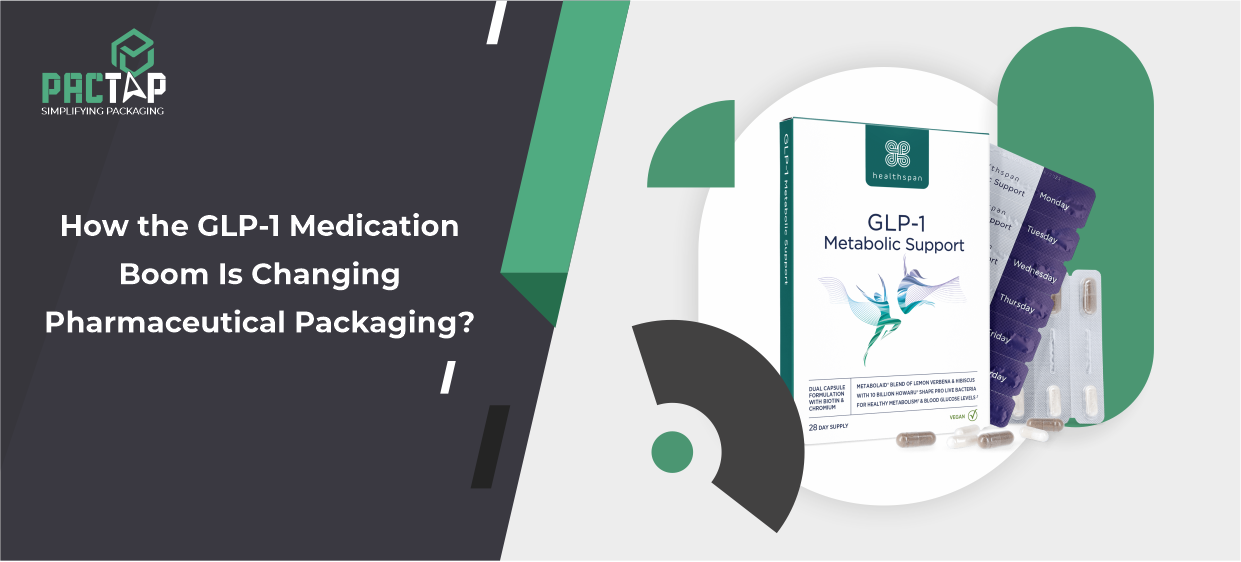
The pharmaceutical landscape is currently witnessing a tectonic shift driven by the explosion of GLP-1 (Glucagon-Like Peptide-1) receptor agonists like semaglutide and tirzepatide. As of 2026, these medications have moved beyond specialized diabetes care to become global blockbusters for obesity and chronic disease management.
However, with massive demand comes massive responsibility. Regulatory bodies like the FDA (U.S. Food and Drug Administration) and EMA (European Medicines Agency) have introduced stringent new pharmaceutical packaging requirements to address three critical pillars: Cold-Chain Integrity, Anti-Counterfeiting, and Patient Safety.
This article explores the evolving world of GLP-1 packaging and what manufacturers, pharmacies, and patients need to know to stay compliant and safe.
The GLP-1 Boom: Why Packaging Matters Now
The surge in GLP-1 prescriptions—projected to reach a market value of over $150 billion by 2030—has placed unprecedented pressure on the pharmaceutical supply chain. Because these drugs are temperature-sensitive biologics, traditional “pill-in-a-bottle” packaging is insufficient.
In 2025 and 2026, regulators shifted focus from mere supply availability to quality control. The goal is to ensure that every dose, whether delivered to a hospital or a patient’s doorstep, maintains its molecular structure and potency.
New Cold-Chain Integrity Standards
Unlike standard medications, GLP-1s must be kept within a strict temperature range, typically 2°C to 8°C (36°F to 46°F). Failure to maintain this “cold chain” can lead to protein denaturation, rendering the drug ineffective or, in some cases, harmful.
Key Regulatory Updates for 2026:
- Validated Insulated Shippers: Gone are the days of simple Styrofoam boxes. New requirements mandate the use of “lane-validated” packaging that accounts for seasonal temperature swings and transit delays.
- Digital Temperature Indicators: Agencies now recommend (and in some jurisdictions, require) single-use digital loggers, such as the Thermis Tag 1E, which provide a visual “alarm” if the medication exceeds its safe temperature range for even a few minutes.
- Zero “Dead Space” Requirements: To prevent cold air leakage, secondary packaging must now include custom inserts or cushioning to eliminate air pockets within the shipping container.
The Fight Against Counterfeit GLP-1s
The high cost and high demand for drugs like Ozempic and Mounjaro have created a “gold rush” for counterfeiters. In early 2026, the FDA and MHRA (UK) reported a spike in unregulated, mass-compounded GLP-1s that were either sub-potent or contained dangerous contaminants.
Anti-Counterfeiting Packaging Technologies:
To combat this, the SAFE Drugs Act of 2025 and updated EU regulations have made the following features standard:
| Feature | Function |
|---|---|
| Serialization (Track & Trace) | Unique 2D barcodes on every unit to track the product from the factory to the patient. |
| Tamper-Evident Seals | Physical seals that show visible “void” patterns if the box has been opened. |
| RFID & NFC Tags | Embedded chips that allow pharmacies to verify authenticity via a smartphone scan. |
| Invisible Ink/Holograms | High-security printing techniques that are nearly impossible for counterfeiters to replicate. |
Packaging for the “At-Home” Patient
A significant portion of the GLP-1 market has shifted to Home Delivery. This has forced a redesign of the “user experience” of the packaging.
- Discreet yet Durable: Packaging must be discreet to protect patient privacy but robust enough to survive “last-mile” delivery via standard couriers.
- Clearer Dosing Instructions: To prevent the 2025 surge in dosing errors, new packaging must feature larger text, simplified icons for pen activation, and “Quick Start” QR codes that lead to video tutorials.
- Eco-Friendly Solutions: With millions of pens being discarded monthly, there is a push for reusable shipping systems and recyclable secondary packaging to meet the EU’s Packaging and Packaging Waste Regulation (PPWR).
The Rise and Regulation of Compounded GLP-1s
For much of 2024, the FDA allowed compounding pharmacies to produce “copies” of GLP-1s due to shortages. However, as of early 2026, the FDA has cracked down on this practice.
- API Restrictions: The FDA now maintains a “Green List” of vetted foreign manufacturers. Any GLP-1 active ingredient sourced from outside this list is subject to immediate seizure.
- Labeling Compliance: Compounded versions must now carry a prominent disclaimer: “FDA has not approved or otherwise reviewed this compounded product.” They are also forbidden from using terms like “generic” or “clinically proven” in their marketing.
Conclusion
The GLP-1 medication boom is more than a weight-loss trend; it is a catalyst for a revolution in pharmaceutical packaging. By 2026, the industry will have moved toward a “Smart Packaging” model where the box is just as advanced as the medicine inside. For manufacturers, staying ahead of these cold-chain and anti-counterfeiting requirements isn’t just a legal necessity—it’s the only way to maintain patient trust in an increasingly crowded market.